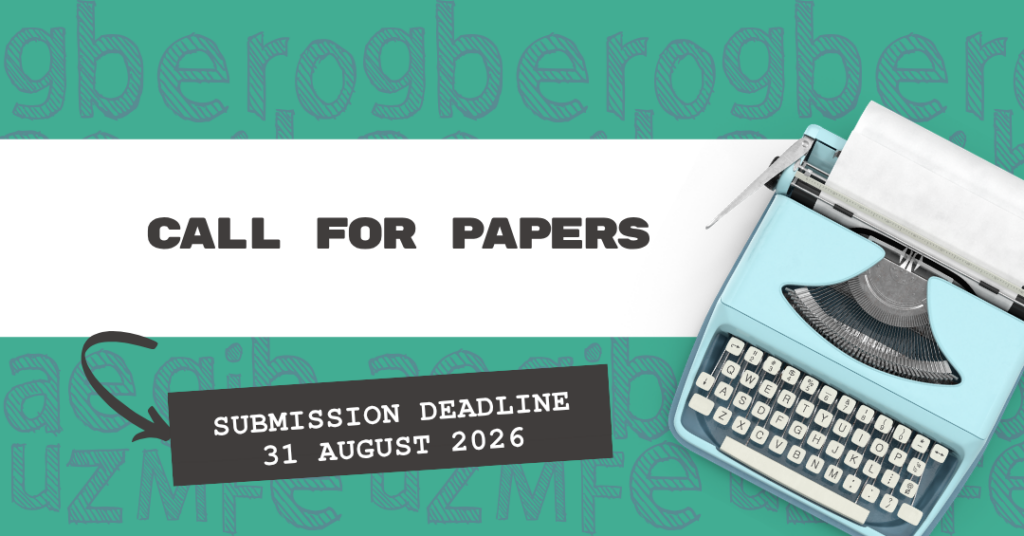
- Submission deadline: 31 August 2026
- Papers must be submitted in Arabic or English
In light of the growing importance of mediation as an effective and internationally recognized mechanism for the resolution of commercial disputes, there is an increasing need to encourage both academic and practice-oriented research in this evolving field.
As part of its broader mandate to promote alternative dispute resolution and capacity-building across the Arab region and beyond, CRCICA is pleased to launch its Mediation Research Competition, to be announced during the MediMonday Inaugural Lecture on 6 April 2026.
This initiative aims to stimulate high-quality legal research, foster critical thinking, and engage both young practitioners and academics in advancing mediation practice. It also seeks to reinforce CRCICA’s role in shaping mediation discourse, complement its ongoing initiatives—including the MediMonday Lecture Series—and enhance its visibility and impact at both the regional and international levels.
The CRCICA Mediation Research Competition CMRC is conceived as an initiative with an international outlook, aimed at engaging participants interested in mediation and ADR, and encouraging research these fields.
The papers/ research submitted within the Competition will be in two official languages:
Arabic, in recognition of the importance of fostering high-quality legal scholarship within Egypt, the Arab region, and Arabic-speaking jurisdictions
• English, to ensure broader participation internationally, and to contribute to global discourse on mediation and ADR
Submissions are encouraged to reflect:
• Regional legal developments and practices in Egypt, the Arab region, and Africa
• Comparative and cross-border perspectives, particularly in relation to the Singapore Convention on Mediation and other international frameworks
Awards will be granted to the top two papers in each language category (Arabic and English), ensuring balanced recognition across both linguistic tracks
Participants are invited to submit papers addressing one of the following topics:
• The Recognition of International Settlement Agreements: The Innovative Framework of the Singapore Convention on Mediation
• The Singapore Convention and the New York Convention: A Comparative Analysis
• Towards Effective Implementation: Key Considerations for National Legislation Implementing the Singapore Convention on Mediation
• National Approaches to the Implementation of the Singapore Convention on Mediation: A Comparative Perspective
• Article 5 Singapore Convention in Practice: Between Expansive and Restrictive Interpretations—Ethical Standards Applicable to Mediators
– The Competition is open to a broad and diverse pool of participants, reflecting CRCICA’s commitment to fostering engagement across practice, academia, and emerging talent. Eligible participants include:
• Legal and ADR practitioners.
• Academics and researchers, including university faculty members and independent scholars.
• Postgraduate students, including LL.M. and PhD candidates specializing in law, dispute resolution or related disciplines
-The Competition particularly encourages participation from individuals with an interest in:
• Mediation and ADR
• International dispute resolution
• Comparative legal systems
• Cross-border commercial practices
-Submissions may be:
• Individual, or
• Co-authored by a maximum of two authors, provided that both contributors have made a meaningful intellectual contribution to the work
-Each participant (or team) may submit only one paper.
-To ensure consistency, fairness, and high academic quality, participants are requested to adhere to the following submission requirements:
• All Papers should include an abstract of 300 words maximum.
Language
• Papers must be submitted in either Arabic or English
• Submissions will be evaluated within their respective language category
• Authors are expected to ensure a high standard of linguistic clarity and professionalism in the chosen language
Word Count:
• Minimum: 4,000 words, including footnotes
• Maximum: 7,000 words, including footnotes
• Submissions that fall significantly outside this range may not be considered
• Authors are encouraged to maintain substantive depth while ensuring conciseness and focus.
Formatting Requirements
To facilitate a uniform review process, submissions must comply with the following:
• Font: Times New Roman
• Font Size:
-12 pt for main text
-10 pt for footnotes
• Line Spacing: 1.5
• Margins: Standard (2.5 cm on all sides)
• Alignment: Justified
• Citation Style:
-Any recognized academic citation style, provided it is applied consistently throughout the paper
• Font: Traditional Arabic or Simplified Arabic
• Font Size:
-16 pt for main text
-12 pt for footnotes
• Line Spacing: 1.5
• Margins: Standard (2.5 cm on all sides)
• Alignment: Justified
• Citation Style:
-Any recognized legal citation style, provided it is applied consistently throughout the paper
Originality and Academic Integrity
• Submissions must be:
-Original work of the author(s)
-Unpublished and not under consideration elsewhere until announcement of Award
• Any form of plagiarism or improper citation will result in automatic disqualification
• Authors are responsible for ensuring:
-Proper attribution of all sources
-Compliance with accepted standards of academic integrity
Anonymity Requirements (Blind Review)
To preserve the integrity of the evaluation process:
• The main manuscript must be fully anonymized, with:
-No author names
-No identifying references (including acknowledgments or self-references that reveal identity)
• Any identifying information should appear only on a separate cover page
Submission Format and Documents
Each submission must include the following:
-In Word format (.doc or .docx)
-Containing:
• Title
• Abstract
• Full text of the paper
• Footnotes
• Full name(s) of author(s)
• Institutional affiliation(s)
• Professional title (if applicable)
• Contact details (email and phone number)
• Language of submission (Arabic / English)
• Title of the paper
-Use of AI: Participants may make limited use of artificial intelligence tools for purposes such as language refinement and proofreading. However, the substantive content, analysis, and arguments presented in the submission must be the participant’s own original work. Applicants must include a declaration confirming the originality of their work and disclosing any use of artificial intelligence tools. In all cases, participants remain fully responsible for the accuracy, integrity, and originality of their submissions.
-CRCICA reserves the right to:
• Disqualify submissions that do not comply with the above requirements
• Request minor revisions, if deemed necessary
• Late submissions will not be considered
The Competition will be evaluated by a distinguished panel comprising:
Submissions will be allocated among members of the Jury Committee based on the language of submission and the total number of papers received. Each submission will be reviewed by a designated number of jury members to ensure a fair, balanced, and efficient evaluation process.
In order to ensure a rigorous, fair, and transparent assessment process, CRCICA will adopt a structured evaluation methodology based on clearly defined criteria. Standardized evaluation forms will be prepared and provided to all jury members to promote consistency and comparability across submissions.
Each paper will be assessed holistically, taking into account both its academic merit and its practical contribution to the field of mediation and alternative dispute resolution.
Core Evaluation Criteria
Submissions will be evaluated based on the following criteria:
• Originality and Innovation
The extent to which the paper presents novel ideas, fresh perspectives, or innovative approaches to mediation or ADR. Particular value will be given to work that moves beyond descriptive analysis and offers original insights.
• Depth and Quality of Legal Analysis
The strength, rigor, and sophistication of the legal reasoning. This includes the author’s ability to critically engage with legal frameworks, case law, and doctrine, and to develop well-supported arguments.
• Practical Relevance and Applicability
The degree to which the paper addresses real-world challenges or provides actionable insights for practitioners, policymakers, or institutions. Submissions that bridge theory and practice will be particularly valued.
• Structure, Clarity, and Coherence
The overall organization of the paper, including the logical flow of arguments, clarity of expression, and coherence between sections. A well-structured and accessible paper will be considered favorably.
• Quality of Research and Use of Sources
The relevance, credibility, and diversity of sources used, as well as the accuracy and consistency of citations. Strong engagement with both primary and secondary sources is expected.
• Contribution to Mediation / ADR Discourse
The extent to which the paper contributes meaningfully to ongoing discussions in mediation and ADR, particularly in relation to emerging issues, regional developments, or international frameworks such as the Singapore Convention on Mediation.
Evaluation Methodology
• Each criterion will be assigned a weighted score, as reflected in the evaluation form
• Jury members will provide:
-Numerical scores, and
-Brief qualitative comments to support their assessment
• Submissions will be evaluated:
-Independently, and
-On a blind review basis, without disclosure of author identity
Consistency and Transparency
To ensure integrity of the process:
• Standardized evaluation forms will be used across all submissions
• Jury members will be guided by a common scoring framework
• CRCICA will compile and review scores to ensure:
-Consistency across evaluators
-Balanced consideration of all criteria
Final Selection
• Final rankings will be determined based on:
-Aggregate scores across all criteria
-Jury comments and recommendations, where relevant
-Additional deliberation in cases of closely ranked submissions
• Evaluation forms will be prepared and provided to jury members to ensure consistency and transparency.
In recognition of excellence in legal research and meaningful contribution to the field of mediation and ADR, CRCICA will grant awards and distinctions designed to both honour outstanding work and provide valuable professional opportunities for participants.
Recognition of the top two papers in each language category will be as follows:
• Official Certificates of Recognition issued by CRCICA, acknowledging their achievement in a ceremony held during the next MediMonday lecture following the announcement of the results.
– Selected winning papers may be considered for publication on CRCICA platforms or partner platforms.
-Winners will be granted complimentary access to selected CRCICA events or a reduction on the registration fees of selected events held within one year following the announcement of the results.
Beyond formal awards, the Competition offers participants valuable professional visibility and engagement opportunities, contributing to their academic and career development.
 | Thank you for Signing Up |

Terms & Conditions | Privacy Policy
Copyright 2026 Cairo Regional Centre for International Commercial Arbitration. All Rights Reserved.