The total number of cases filed before CRCICA until 31 December
2018 reached 1303 cases. In 2018, 77 new cases were filed, compared to 65 in
2017. Further, 2 mediation cases were registered in 2018 compared to a single
one in 2017.
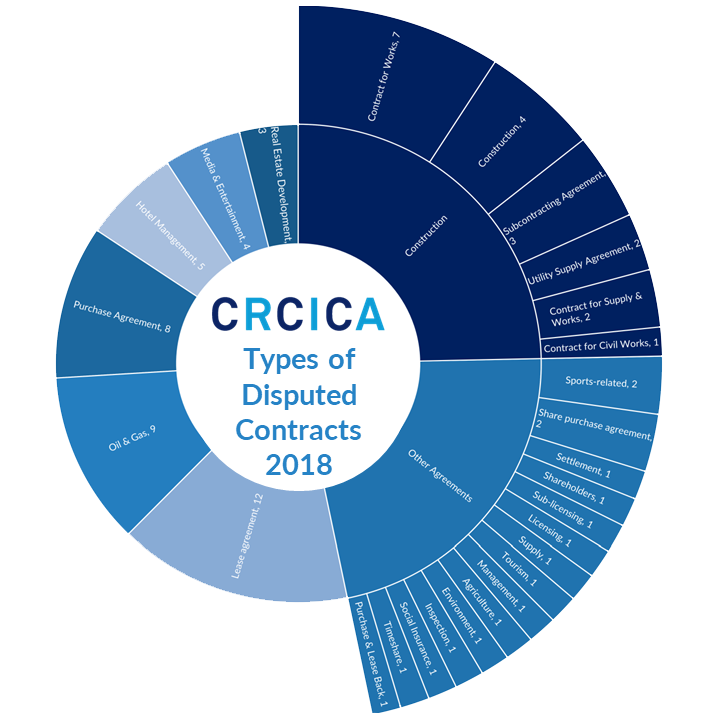
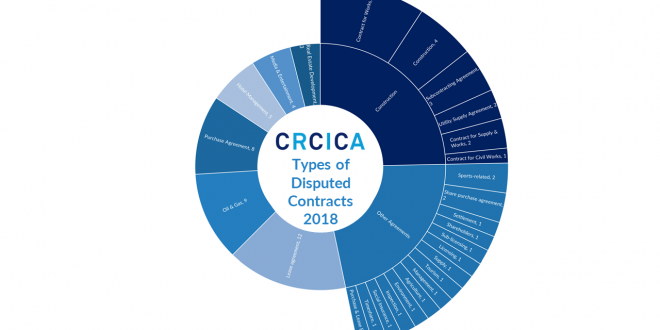
The Centre’s caseload during 2018 involved disputes relating to
various sectors including: Oil & Gas, Construction, Media &
Entertainment, Sports, Real Estate Development, Agriculture and Tourism.
Disputes arising from the Construction Sector, including
construction contracts, contracts for works and utility supply agreements,
ranked on top with nearly 25% of the total number of cases, compared to 32% of
the cases in 2017. As in 2017, these were followed by disputes arising out of
lease agreements, which made up nearly 16% of the total number of cases. Oil
& Gas related disputes in 2018 ranked third, representing nearly 12% of
disputes, closely followed by disputes arising out of purchase agreements and
those relating to Hotel Management and Sports.
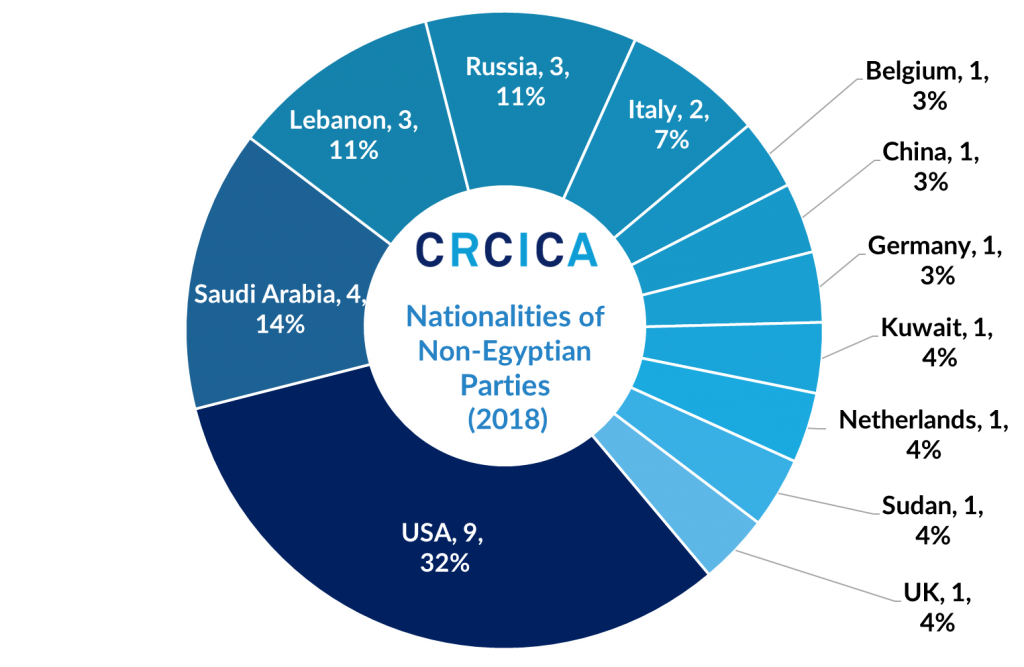
The parties to disputes included 28 Non-Egyptian parties. Parties
from the USA ranked on top of Non-Egyptian parties referring their disputes to
the Centre, with 9 US parties, followed by parties from Saudi Arabia and then
parties from Lebanon and Russia. There were also parties from Italy, Belgium,
China, Germany, Kuwait, Netherlands, Sudan and the UK. It is worth noting that
these conservative figures do not include Egyptian companies owned or ultimately
controlled by non-Egyptian shareholders.
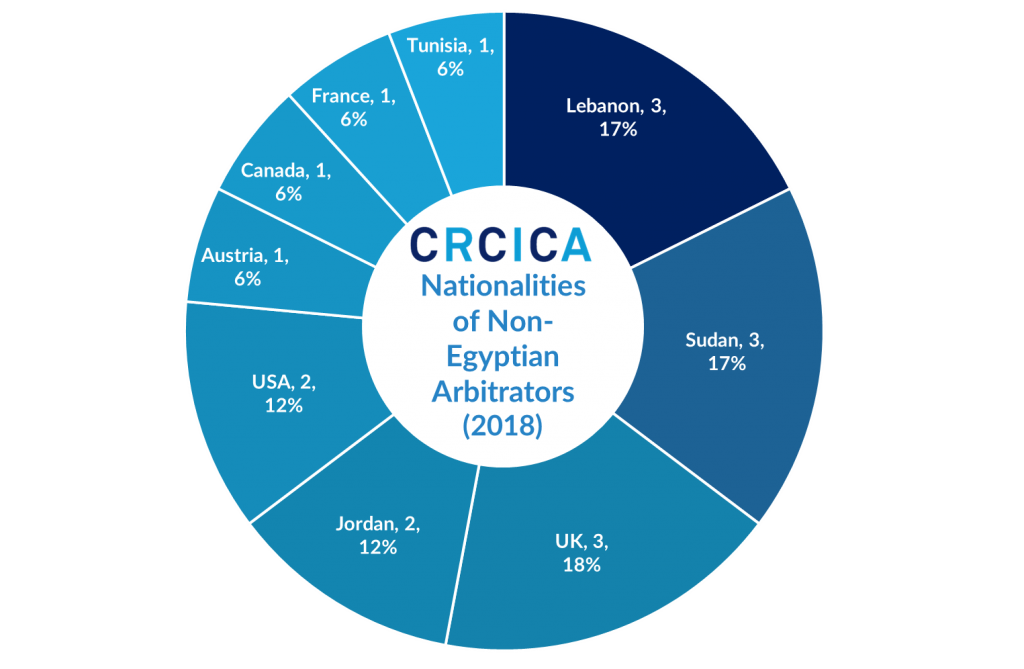
2018 also witnessed the appointment of 17 Non-Egyptian arbitrators,
with the number of arbitrators coming from the UK, Lebanon and Sudan coming at
the top. There were also arbitrators from Austria, Canada, France, Jordan,
Tunisia and the USA.
In 2017, the CRCICA signed the Pledge for Equal Representation in
Arbitration, according to which the CRCICA implemented a gender diversity
policy when acting as an appointing authority in addition to its implementation
of a regional and age diversity policy.
In this regard, as of 2017 the CRCICA began including in its
caseload reports statistics, data, and information on the number and percentage
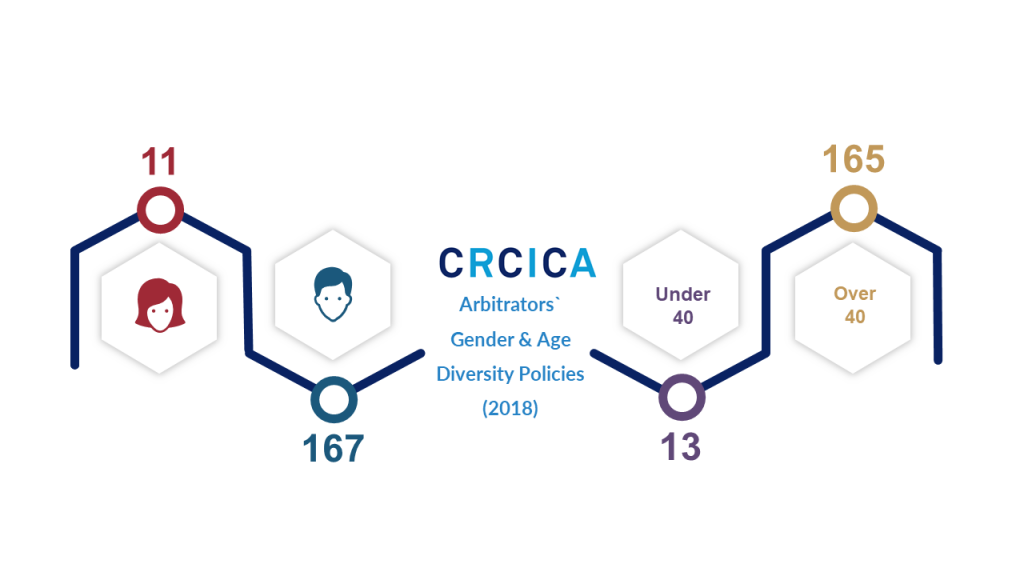
of female arbitrators, whether appointed by the Centre or by the parties. For
the cases registered in 2018, 11 female arbitrators were appointed, compared to
9 female arbitrators cases registered in 2017.
These numbers and percentages, though both still modest, show a
tendency to increase female appointments by the CRCICA as well as by parties
and co-arbitrators. In fact, 2018 saw the composition of an all-female
tribunal. Similarly, in a case where both co-arbitrators were male, their
chosen presiding arbitrator was a woman.
There were also 13 arbitrators aged under 40 appointed during 2018
as co-arbitrators as well as sole arbitrators. A number of the arbitrators
under 40 were also female arbitrators as well.
In implementation of CRCICA’s regional diversity policy, 2
arbitrators from Tunisia and Sudan were appointed in cases registered in 2018
where the language of arbitration was Arabic, compared to 2 arbitrators from
Nigeria and Sudan appointed by the CRCICA in 2017 in cases where the language
of arbitration was English and Arabic respectively.
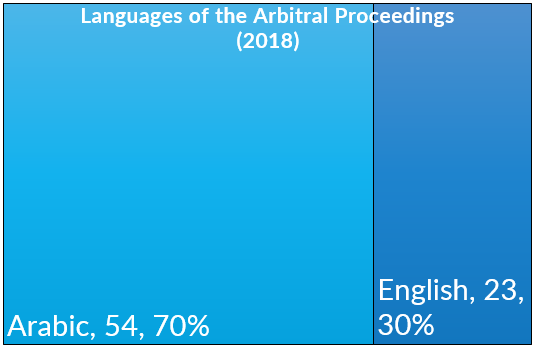
In 2018, 54 arbitration cases were conducted in Arabic, (i.e. 70%),
whereas 23, (i.e. 30%), were conducted in English. The French version of the
CRCICA Rules has been issued on 31 March 2017.
The total number of mediations filed before CRCICA until 31
December 2018 reached 11 cases. In 2018, 2 new cases were filed.
The first case was filed on the basis of a BIT and involved an
Egyptian investor and a Middle East state and a number of its entities. The
mediation was filed as an attempt to settle the dispute amicably and trigger
the cooling-off period provided for in the BIT. The BIT provided for
arbitration before CRCICA as an option for the investors to settle their
disputes with the host state.
The second case involved a multi-tier dispute resolution clause,
which required the parties to participate in mediation prior to initiating
arbitral proceedings. The dispute involved a contract for works to be performed
in a factory in Egypt.