
Resounding Success: The Inaugural Egyptian Arbitration Days (EAD) Cements Egypt’s Role as a Global Arbitration Hub
Oct 13 2025
Cairo – 16 October 2025
The inaugural edition of the Egyptian Arbitration Days (EAD), held in Cairo, has concluded with resounding success, firmly establishing the event as a premier global platform for the international arbitration community. Spanning multiple days in October 2025, the EAD brought together a distinguished assembly of experts, leading practitioners, judges, policymakers, and academics from across the globe, reinforcing Egypt's significant historical and contemporary role as a crossroads for international trade and legal affairs. The series of events featured meticulously curated programs of engaging panels and practical workshops, addressing critical, multilingual discussions on the latest trends, challenges, and opportunities in international commercial and investment arbitration, fostering an invaluable environment for knowledge exchange, collaboration, and innovation in dispute resolution. The overwhelmingly positive feedback underscores the event's success in providing a dynamic, cosmopolitan space for top disputes professionals to explore the future of the field.
The Cairo Regional Centre for International Commercial Arbitration (CRCICA) served as a Pioneer Partner of the first Egyptian Arbitration Days. CRCICA's involvement, which included hosting a key conference event marking the 30th anniversary of Egypt's Arbitration Law in collaboration with CIArb Egypt Branch. The Centre's history of promoting arbitration culture through various initiatives, publications, and its well-established rules further enhanced the gravitas and relevance of the EAD, setting a new benchmark for arbitration dialogue in the Middle East and Africa.
We are profoundly grateful for the unwavering support and diligent guidance provided by the distinguished individuals who shaped the first Egyptian Arbitration Days (EAD). The success of this inaugural event is a testament to their dedication and shared vision for the future of dispute resolution.
The Board Members of Egypt Arbitration Days (EAD) comprise esteemed leaders and experts shaping the global arbitration landscape. Their collective experience and vision drive EAD’s mission to advance excellence in international dispute resolution. Our sincere appreciation extends to all the Board Members: Dr. Mohamed Abdel Raouf (Partner, Abdelraouf Law Firm), Prof. Dr. Mohamed Abdel Wahab (Founding Partner, Zulficar & Partners), Dr. Ismail Selim, Director of CRCICA, and Dr. Dalia Hussein, Deputy Director of CRCICA, Girgis Abd El Shahid (Managing Partner, Shahid Law Firm), Samaa Haridi (Partner, King & Spalding), and Mohamed Shelbaya (Founding Partner, Gaillard Banifatemi Shelbaya Disputes).
Furthermore, the tireless effort and seamless execution of the event would simply not have been possible without the committed work of the Executive Committee members: Youssef Al Saman (Partner, Zulficar & Partners), Inji Fathalla (Counsel, Shahid Law Firm), Mohamed El Mahdy (Senior Associate, Galadari Law), Salma Abdelaziz (Senior Associate, Clyde & Co), and Amr Omran (Counsel, Freshfields Bruckhaus Deringer LLP). We thank them all sincerely for lending their invaluable time and expertise to this pioneering endeavor.
EAD Website: https://egyptarbitrationdays.com/
View Details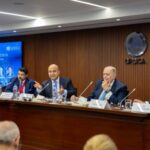
CRCICA Celebrates: Egyptian Arbitration Law After Thirty Years
Oct 13 2025
Cairo – 15 October 2025
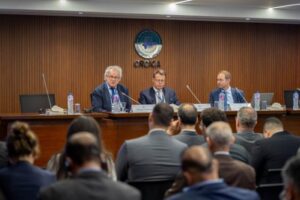
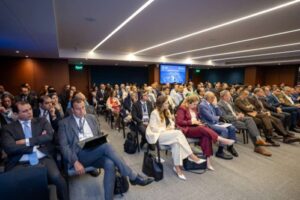
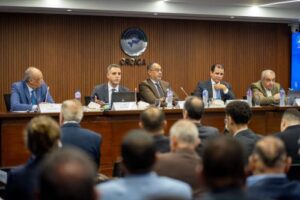
The Cairo Regional Centre for International Commercial Arbitration (CRCICA) successfully convened a pivotal conference under the umbrella of the first Egyptian Arbitration Days (EAD), marking a significant milestone in the country's legal history. The conference, titled "The Egyptian Arbitration Law after Thirty Years: A National Journey through a Comparative Lens" (قانون التحكيم المصري بعد ثلاثة عقود: رؤى مقارنة), took place on Wednesday, October 15, 2025, at the CRCICA headquarters in Cairo. The full-day event celebrated the 30th anniversary of Egypt's pioneering Arbitration Law No. 27 of 1994 and drew a wide-ranging, high-level audience. The inaugural session featured key figures including Judge Mostafa El Bahabety, Deputy Minister of Justice, Prof. Dr. Ismail Selim, Director of CRCICA, Prof. Dr. Mohamed Abdel Wahab, President of the CIArb, and Mr. Craig Tevendale, Head of the CRCICA Advisory Committee. This opening set the stage for an in-depth and engaging discussion that underscored the success of the conference in bringing together leading global voices on dispute resolution.
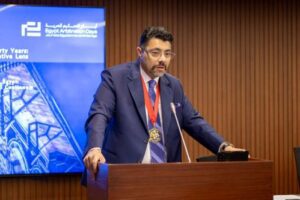
The program continued with a stirring Key Note Address delivered by Prof. Dr. Mohamed Abdel Wahab, who presented his paper titled: "Three Decades of Modern Arbitration in Egypt: An Epic Journey through the Spatial-Temporal Continuum." Following this, Panel 1, "Egyptian Arbitration Law in Balance," was moderated by Mr. Hazim Rizkana (Managing Partner at Rizkana and Partners) and honed in on the domestic legal framework. The panel featured critical analyses from Dr. Hani Sarie-Eldin on the Draft Amendments of the Egyptian Arbitration Law; Mr. Sherif El Saadani (Amereller) discussing The scope of Article 19; Dr. Haytham Ali (Ali & Co.) examining Barriers to Enforcement including Article 58 (1); and Mr. Yasser Mansour (Mansour Law Office) exploring Article 45.
The conference broadened its scope with Panel 2, "Arbitration Law and Arbitration Institutions," which focused on the interplay between national laws and institutional practices, moderated by Ms. Niamh Leinwather (Secretary General of VIAC). This session offered valuable institutional insights from regional and international centres with speakers including Dr. Maria Fogdestam Agius (Westerberg & Partners, SCC Council member), Mr. Ahmed Husain (CEO of the Bahrain Chamber for Dispute Resolution - BCDR), Mr. Vishnu Menon (International Case Counsel at the Asian International Arbitration Centre - AIAC), Ms. Valeria Senatorova (CEO of the Russian Arbitration Center RAC), and Mr. Florian Cahn (Framatome GmbH, Member of the DIS board).
The day concluded with Panel 3, "Comparative Implementation and Reforms of Arbitration Laws," expertly moderated by Mr. Jean-François Tossens (Partner at Tossens Goldman Gonne). This final panel provided a robust international comparison, featuring Mr. Ahmed Ibrahim (CRCICA Advisory Committee Member) on The Implementation and Construction of the UAE Federal Arbitration Law of 2018; Dr. Philippe le Boulanger (Leboulanger & Associés) exploring “French Arbitration Law: Towards a codification. A Napoleonic Syndrome?”; Dr Kilian Bälz (Amereller RA PmbB) providing The German Perspective on Arbitration Law Reform; and Ms. Meriam Al-Rashid discussing the development of Iraq’s New Draft Arbitration Legislation and its role in fostering investor confidence. The success of this conference, both in its intellectual depth and the calibre of its speakers, affirmed CRCICA’s central role in advancing arbitration dialogue in the MENA region and cemented its status as a vital component of the inaugural Egyptian Arbitration Days.

View Details 
CRCICA Clinches Double Victory at AfAA Awards 2025: Named DEI Champion and Arbitral Institution of the Year
Oct 12 2025
Cairo – 12 October 2025
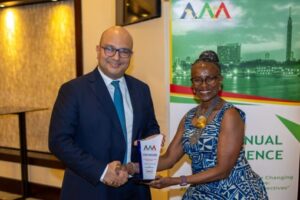
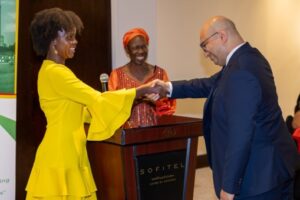
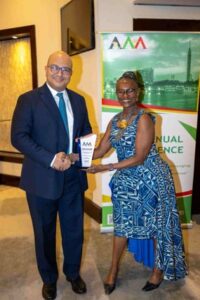
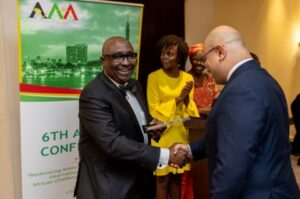
The Cairo Regional Centre for International Commercial Arbitration (CRCICA) celebrated a monumental achievement at the AfAA Awards 2025, securing not one, but two of the organization's most significant honors. The awards were presented on October 12, 2025, in Cairo, Egypt, during the closing ceremony of the successful 6th Annual Conference of the African Arbitration Association (AfAA). CRCICA was first recognized with the prestigious "Diversity, Equality and Inclusion (DEI) Champion" Award. This award highlights the institution's outstanding commitment and consistent effort to advance and promote DEI within the African arbitral and Alternative Dispute Resolution (ADR) community. The criteria for this distinction specifically celebrated organizations that promote diversity and inclusion, consistently ensure equal representation (based on gender, geography, language, and age) for conference speaking slots, and demonstrate transparency and equal representation in arbitration and ADR appointments through data publication. Further cementing its position as a continental leader, CRCICA was also honored with the highly coveted Arbitral Institution of the Year Award. This accolade recognizes the stand-out arbitral institution headquartered in Africa, considering its overall work, organization, innovative initiatives, user experience, and demonstrated achievements in Environmental, Social, and Governance (ESG) metrics. CRCICA's dual victory underscores its role as a leading force actively working towards a more equitable, representative, and high-performing future for dispute resolution, setting a new benchmark for institutions across Africa and globally.
View Details 
CRCICA Hosts 6th AfAA Conference: Celebrating Africa’s Arbitration Excellence
Oct 10 2025
Cairo – 12 October 2025
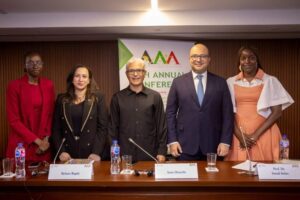
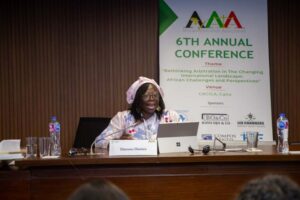
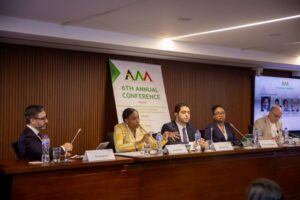
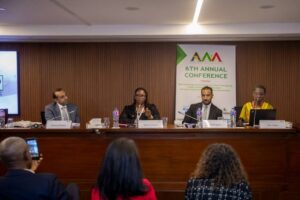
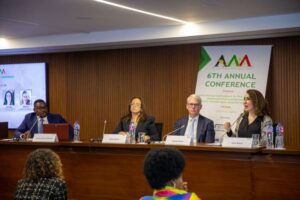
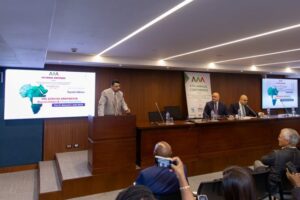
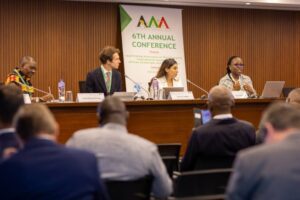
The Cairo Regional Centre for International Commercial Arbitration (CRCICA) proudly hosted the 6th Annual Conference of the African Arbitration Association (AfAA) from October 10–12, 2025, under the theme: "Rethinking Arbitration in a Changing International Landscape: African Challenges and Perspectives."
In his opening remarks, Dr. Ismail Selim, Director of CRCICA, warmly welcomed guests to Cairo, underscoring CRCICA’s role since 2017 as a key partner in establishing the AfAA and unifying the African voice in international arbitration. He declared the event a "celebration of Africa’s excellence in arbitration," noting the continent's successful transformation of the discipline into a robust system of justice marked by independence and integrity.
Dr. Selim highlighted the evidence of this African excellence: the rise of strong arbitral institutions, the increased presence of African experts in global cases, and the widespread adoption of modern arbitration frameworks by governments. He stressed that this excellence is driven by a unique "spirit of resilience, innovation, and authenticity," asserting, "Africa’s arbitration community is not following global trends; we are shaping them."
CRCICA's deep involvement was demonstrated by its recent inclusion of "considerations of diversity" in Article 9.3 of its Rules, formalizing a long-standing practice of appointing African arbitrators from numerous countries across the continent, reflecting a recent surge in Non-Egyptian African Parties resolving disputes under CRCICA Rules.
As a Strategic Partner, CRCICA’s role reflects a shared vision for a united and respected African arbitration community. Dr. Selim concluded by thanking the AfAA leadership, partners, and the CRCICA team for their efforts, encouraging attendees to share knowledge and collectively build a future of dispute resolution that is innovative and proudly African.

View Details 
Prof. Georges Affaki’s lecture entitled: “The Arbitrator between the Duty of Impartiality and the Duty of Disclosure: Reflections on the Legitimacy of the Standard and the Risks of Extremism in Its Application” at CRCICA
Feb 05 2025
The Cairo Regional Centre for International Commercial Arbitration (CRCICA) Welcomed Professor Georges Affaki for a Lecture
Cairo - 4 February 2025
In a distinguished intellectual evening, the Cairo Regional Centre for International Commercial Arbitration (CRCICA) organized an insightful seminar delivered by Prof. Georges Affaki, a prominent international arbitrator, Justice of the Qatar International Court, admitted before the French courts, and Professor at the University of Paris. With decades of extensive experience in law and arbitration, Prof. Affaki has become one of the most influential figures in the field. He is also a member of governing councils of international organisations and has served as a consultant to numerous governments and institutions on arbitration and dispute resolution matters. In addition to his practical experience, he has made significant academic and research contributions that have enriched modern arbitration principles at the international level.
View DetailsThe lecture, titled "The Arbitrator between the Duty of Impartiality and the Duty of Disclosure: Reflections on the Legitimacy of the Standard and the Risk of Extremism in Its Application," provided an in-depth exploration of a timely and thought-provoking topic.
The lecture was moderated by Prof. Ismail Selim, Director of CRCICA, who provided valuable insights into the topic, highlighting CRCICA’s commitment to fostering transparent and effective arbitration practices. The session focused on the concept of the duty of disclosure in international arbitration and the need to reconsider its established principles to ensure fairness and impartiality in the arbitration process. Prof. Affaki emphasized from the outset that disclosure is not an end in itself but rather a tool that enables the parties to make informed decisions regarding an arbitrator’s impartiality and independence. The seminar examined recent developments that have impacted the arbitration landscape, allowing Prof. Affaki to present in-depth insights into the role of disclosure in enhancing transparency and trust in the arbitration process. Key topics discussed included the standards for the determination of challenges of arbitrators, factors that may raise doubts about their impartiality, and the extent to which excessive disclosure requirements could affect the efficiency of international arbitration. The discussion covered the criteria used for assessing impartiality and independence, with Prof. Affaki highlighting the difference between an objective standard, adopted by the arbitral institution or a court when deciding on a challenge against an arbitrator, and a subjective standard for disclosures, which relies on the parties' perception of whether or not there is an absence of impartiality and independence. He also addressed the impact of an arbitrator’s reputation and the importance of avoiding opportunistic challenges by parties when submitting applications for challenge. Regarding issues that might cast doubt on an arbitrator’s impartiality, Prof. Affaki queried whether grounds for challenge should be limited to financial dependency while disregarding personal relationships or social connections that do not directly affect an arbitrator’s independence. He also discussed the need to set clear boundaries for the duty of disclosure so that it does not extend to situations covered under the "green list" of the International Bar Association (IBA) Guidelines on Conflicts of Interest in International Arbitration. The seminar also addressed the challenges posed by excessive disclosure, particularly as some arbitration institutions, prompted by a desire to stave off potential court challenges to awards, increasingly accept challenges based on non-disclosure, even when the omitted information does not impact an arbitrator’s impartiality. Prof. Affaki warned of the risks associated with this trend, particularly in investment arbitration, which has witnessed significant developments such as the adoption of a code of conduct prohibiting dual roles for arbitrators, lawyers, and legal experts. Potential solutions to mitigate excessive disclosure requirements were also discussed. Among them was the idea that an arbitrator should not be open to challenge for not meeting reasons that were known only to the parties when selecting that arbitrator. Additionally, the seminar proposed enhancing the concept of a "duty of cooperation" between arbitrators and parties, making disclosure a shared responsibility rather than an obligation solely imposed on the arbitrator. On the future of arbitration, Prof. Affaki raised questions about the feasibility of utilizing artificial intelligence (AI) systems to create a comprehensive database of cases and arbitrators in international arbitration Centres, allowing for preemptive verification of disclosures while stopping short of prompting an increase in abusive challenges. The seminar concluded with several key recommendations, with attendees agreeing on the need to distinguish between disclosure as a legal obligation and the assessment of whether such disclosure actually affects an arbitrator’s impartiality and independence. The importance of adopting an objective standard in evaluating impartiality and independence was emphasized, along with the need to avoid excessive formalities that may hinder the arbitration process due to unreasonable disclosure requirements. At the close of the seminar, Prof. Ismail Selim asserted that arbitrators' independence should be subject to different standards compared to judges due to the contractual nature of arbitration, but emphasized on the paramount importance of the arbitrators’ compliance with their duty to disclose. Amid significant engagement from the attendees, the seminar concluded with extensive discussions, reaching a consensus on the necessity of striking a balance between absolute non-transparency and arbitrary disclosure, in order to reach moderate and reasonable disclosure, thereby ensuring the continued effectiveness of international arbitration as a reliable and equitable dispute resolution mechanism.The lecture was widely praised for its insightful analysis and significant contribution to the ongoing discourse in international arbitration.

